The Ukrainian Media and Communication Institute’s work in 2024 resulted in a series of analytical investigations, a major international conference on media literacy, expert public events addressing Russian disinformation, as well as training sessions and other educational activities for journalism educators and diverse audiences.
Since its establishment, the Ukrainian Media and Communication Institute has developed into an analytical and educational center, focusing on three key areas:
- Promoting media literacy;
- Countering informational threats;
- Strengthening independent media (especially through high-quality journalism education).
In 2024, the organization continued to work on these priorities.
“It’s difficult to call 2024 an easy year — for any of us, including our organization. If someone were to ask me how I would characterize this year and our role in it, I would say it was a year of looking for resilience — a solid footing in a world descending into the chaos of conflicts and wars. I saw our organization’s main mission as helping those we work with, and work for, to restore or maintain that resilience. But I would also call it a year of searching for wisdom in a world that is losing its common sense, overflowing with disinformation, fake news, and conspiracy theories. We also sought to help our audiences uncover those grains of truth. We hope we contributed to this mission,” said UMCI’s Executive Director Diana Dutsyk.
The Ukrainian Media and Communication Institute: A Leading Analytical Center
As an independent think tank, the UMCI conducts media research, analyzes media processes, and examines their impact on politics and society. The organization also fosters and organizes vital expert discussions to develop solutions to various media-related challenges, collaborating with other organizations and state institutions.
Countering Disinformation: Key Focus of Our Research and Analytical Work
In 2024, we conducted two analytical studies addressing the dissemination of and response to Russian disinformation.
The first study was an analytical brief titled “Overview of Media Projects on Countering Disinformation in Ukraine During the Full-Scale War” (available in Ukrainian and English).
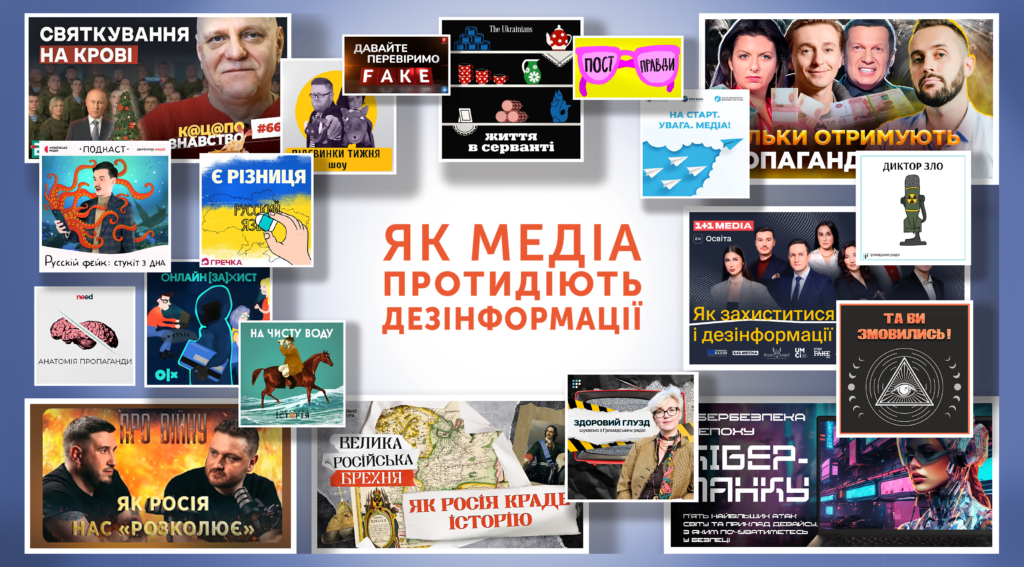
The analytical brief covers the period from February 24, 2022, to June 2024. It provides an overview of 63 national and 57 regional media projects. When working on this brief, we set the following objectives:
- To create a general understanding of media projects focused on countering disinformation;
- To identify key trends in the media market based on the reviewed projects;
- To highlight the primary challenges the media sector faces in the fight against disinformation;
- To propose potential solutions to the identified issues.
The report also incorporates insights from expert discussions held during the intersectoral roundtable titled “The Role of Media in Countering Disinformation During Wartime: Balancing Security and Freedom. How to Enhance Effectiveness,” organized by UMCI in collaboration with the National Council on Television and Radio Broadcasting and supported by ABA ROLI in Ukraine on July 3, 2024. (See discussion highlights here and here; read more about the event further in the text.)This analytical brief garnered significant interest among key stakeholders. For instance, NATO’s office in Ukraine shared it across their platforms (see here and here).
The second study is an analytical report titled “The Transformation of TikTok: From Entertainment to Politics.”
The growth of the Ukrainian TikTok audience and the active spread of Russian disinformation on this platform prompted our Institute to focus on it. Thus, UMCI continued to monitor the influence of social networks.
It is worth noting that at the beginning of 2023, we presented a large-scale study of Telegram channels titled “How Non-Institutionalized News Telegram-Channels Operate and Capture the Audience in Ukrainian Segment”.
UMCI experts reviewed over 30 studies on TikTok usage published after the full-scale Russian invasion of Ukraine. The authors identified the predominant topics in these publications and the methods or tools most commonly used by researchers. Special attention was given to studies on Ukraine and Russian disinformation on TikTok during the full-scale war waged by Russia against Ukraine. All findings are detailed in the analytical report, the results of which were discussed by experts at a local symposium (details below).
Both research projects were made possible with the support of the American Bar Association Rule of Law Initiative (ABA ROLI in Ukraine) as part of the program “Promoting Internet Freedom in Ukraine.”
In addition to large-scale studies and analytical reviews, UMCI monitors key trends in media literacy and journalism education in Ukraine and abroad, publishing analytical articles and interviews on these topics on JTA.com.ua (read more about this in the section dedicated to the website).
International Media Literacy Conference and Other Public Events
An essential part of UMCI’s expert work involves organizing expert discussions, conferences, and other public events aimed at sharing experiences and expertise, as well as finding solutions to the challenges the media sector faces during the full-scale war.
To address the issues highlighted in the above-mentioned analytical studies, we organized two events with the support of ABA ROLI in Ukraine:
The roundtable discussion “The Role of Media in Countering Disinformation During Wartime: Balancing Security and Freedom. How to Enhance Effectiveness” took place on July 3, 2024.
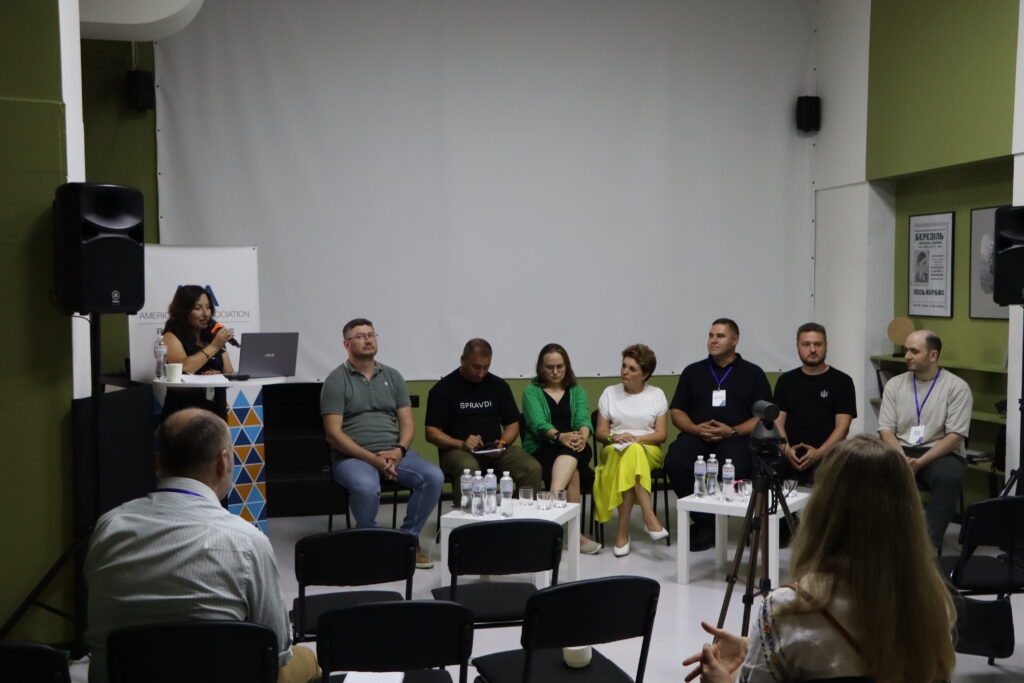
As part of the event, four discussions were held on the following topics:
- Through the Lens of Monitoring: Russian Narratives in Ukrainian Media;
- Russian Disinformation: Challenges and Solutions for Ukrainian Media;
- Countering Disinformation in Media: The Regional Perspective;
- Media and Government Collaboration in Countering Disinformation: Balancing Responsibility and Freedom of Speech.
The discussions featured editors and journalists from national and regional media outlets, media experts, representatives of civil society, and government institutions. A total of 36 experts participated in the event in person. The roundtable was organized in partnership with the National Council on Television and Radio Broadcasting.
Key insights from the discussions are available on our website in these publications here and here. A recording of the live broadcast is also available on our Facebook page.
Local Symposium: From Entertainment to Politics: The Transformation of TikTok in the Era of Propaganda and Disinformation
This symposium took place on December 11, 2024. Media researchers, representatives of civil society organizations, and state institutions discussed why disinformation spreads so rapidly on TikTok, how it can be countered, and whether the platform should be banned.
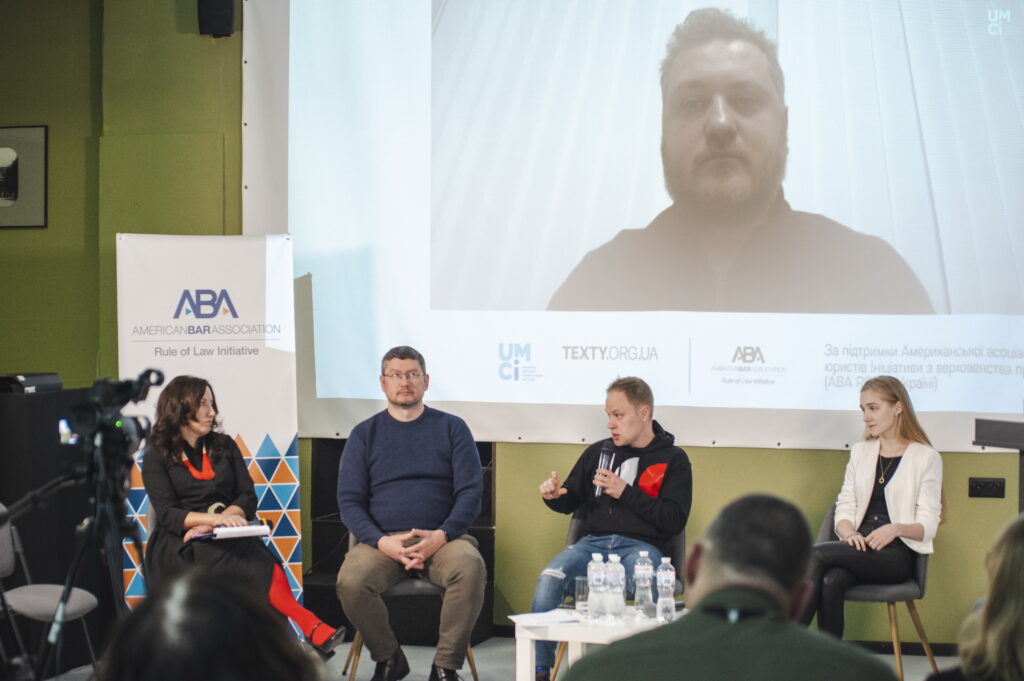
Three thematic expert discussions were held during the event, focusing on the following topics:
- Mechanisms of Spreading Russian Disinformation on TikTok: A Research Perspective;
- Tools for Countering Russian Disinformation on TikTok;
- Risks and Benefits of Legislative/Regulatory Measures for Platforms Like TikTok.
The event took place in a hybrid format: 40 experts participated on-the-scene (including regional representatives), and 50 joined via Zoom. The co-organizer was Texty.org.ua
Key insights from the discussions are summarized in a publication on our website. The event recording is also available on UMCI’s YouTube channel.
International Conference: Media Literacy in the Context of War and Global Transformations
One of the most significant and impactful events in the field of media literacy in 2024 was the international conference Media Literacy in the Context of War and Global Transformations held by the Ukrainian Media and Communication Institute on November 11.
The conference was organized in partnership with DW Akademie, with financial support from Germany’s Federal Ministry for Economic Cooperation and Development (BMZ), the OSCE Support Program for Ukraine, the UK Foreign, Commonwealth & Development Office, and ZINC Network.
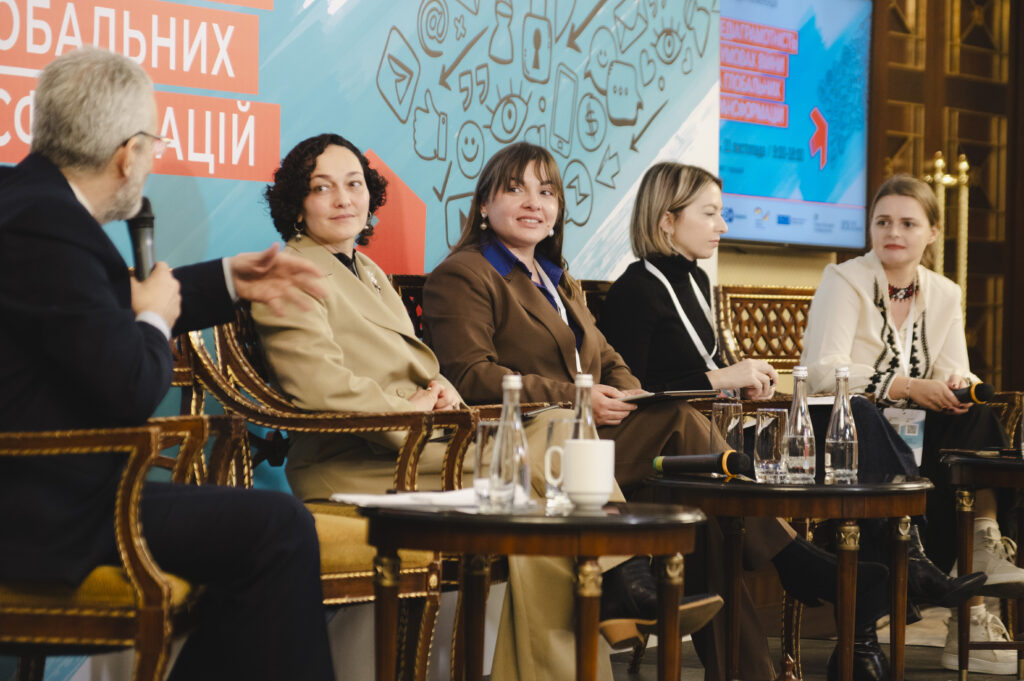
The conference was attended by 90 participants on-the-scene and 100 online via Zoom. Key speakers included international experts:
- Marin Lessenski, Program Director at the Open Society Institute — Sofia (OSIS), delivered a presentation on the European Media Literacy Index;
- Claire Wardle, PhD, Associate Professor at Cornell University’s Department of Communication (USA), shared strategies for mitigating the harm caused by information disorder;
- Ramon Salaverria, Professor of Journalism at the School of Communication, University of Navarra (Spain), talked about adapting media literacy to the rapid evolution of AI.
Panel discussions featured representatives from key international donor organizations working on media literacy in Ukraine, civil society leaders, Ukrainian and foreign scholars, and media experts.
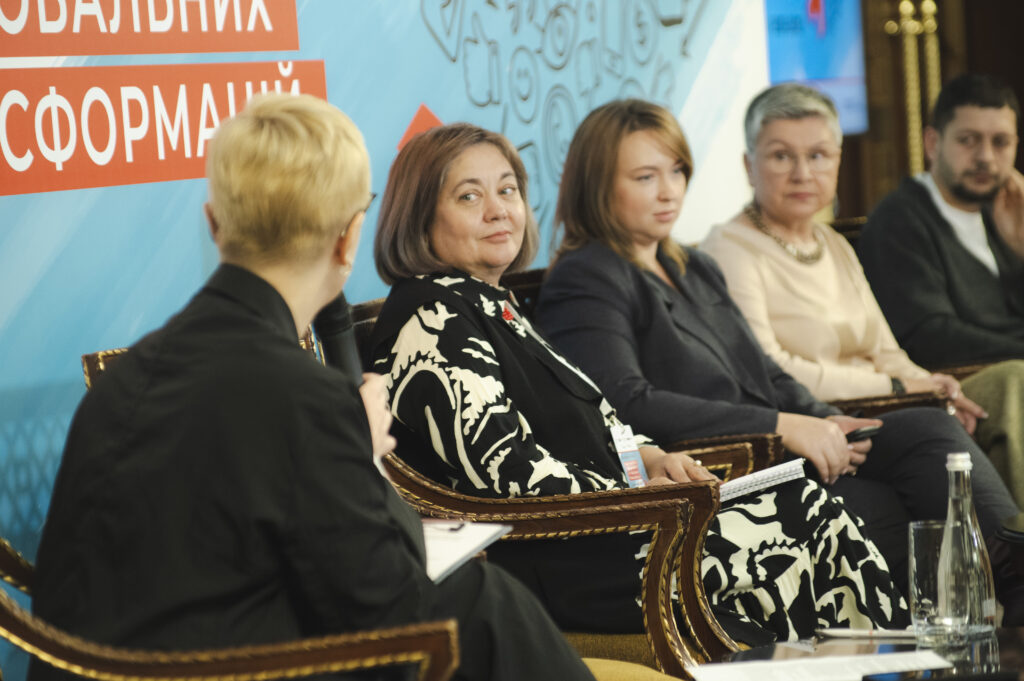
The topics of the discussions were as follows:
- International Collaboration in Enhancing Media Literacy Among Populations in Different Countries (key takeaways published here;
- Quantitative Measurements of Media Literacy: How to Study Audiences and Measure Project Outcomes (key takeaways published here);
- Strategies for Working with Vulnerable Audiences in Media Literacy During War (key takeaways published here);
- Digitalization and the Development of AI as Challenges for Media Literacy (key takeaways published here).
By the way, the publications of the key takeaways from these discussions made it to the top 10 most-read articles on the JTA website in 2024.
The full conference recording is available on our YouTube channel.
Our conference received numerous positive comments from attendees and viewers. Here are a few of them:
“Such events provide valuable information that will help me contribute even more to the audiences I work with as a speaker and media trainer. I am grateful to the organizers,” said Vitaliy Holubyev, Secretary for Educational Activities at the National Union of Journalists of Ukraine.
“Thank you for the opportunity to join the conference! The event was incredibly interesting, each panel addressed important issues, and the speakers highlighted different aspects of these topics,” said Oleksandra Rozumienko, author of media literacy training materials at IREX. “I joined the conference ‘Media Literacy in the Context of War and Global Transformations.’ I want to thank Diana Dutsyk and her team for organizing such an exciting event. I admit that I planned to speak at my panel and then rush off to work on documents, but I stayed for the entire day and did not regret a second. Our ‘donor’ panel was especially fascinating, for which I am extremely grateful to Gohar Khodjayan, Iryna Baran El Ghali, Teresa Chorbacher, Bettina Ruigies, and especially Andriy Kulykov for his traditionally fantastic moderation,” said Maryna Bezkorovayna, head of the British Foreign, Commonwealth & Development Office program on strengthening information resilience in Ukraine.
The Ukrainian Media and Communication Institute puts significant volunteer efforts into educating various audiences.
In particular, on the eve of Independence Day, UMCI, in collaboration with the Mohyla School of Journalism and the Kyiv-Mohyla Business School, held a professional discussion on the topic “Ukrainian Journalism: From ‘Freedom from’ to ‘Freedom for’.”
Journalists who were at the forefront of independent Ukrainian journalism in the 1990s participated in the discussion. Those who participated were Olga Musafir, Oleksandr Tkachenko, Mykola Veresen, Oleksandr Kharchenko, Mykola Kniazhytskyi, and Yefrem Lukatskyi. They discussed how war and technology are changing the media landscape. The discussion was moderated by Diana Dutsyk, Founder and Executive Director of the Ukrainian Media and Communication Institute, and Marta Dyczok, a board member of our organization and researcher from Canada.
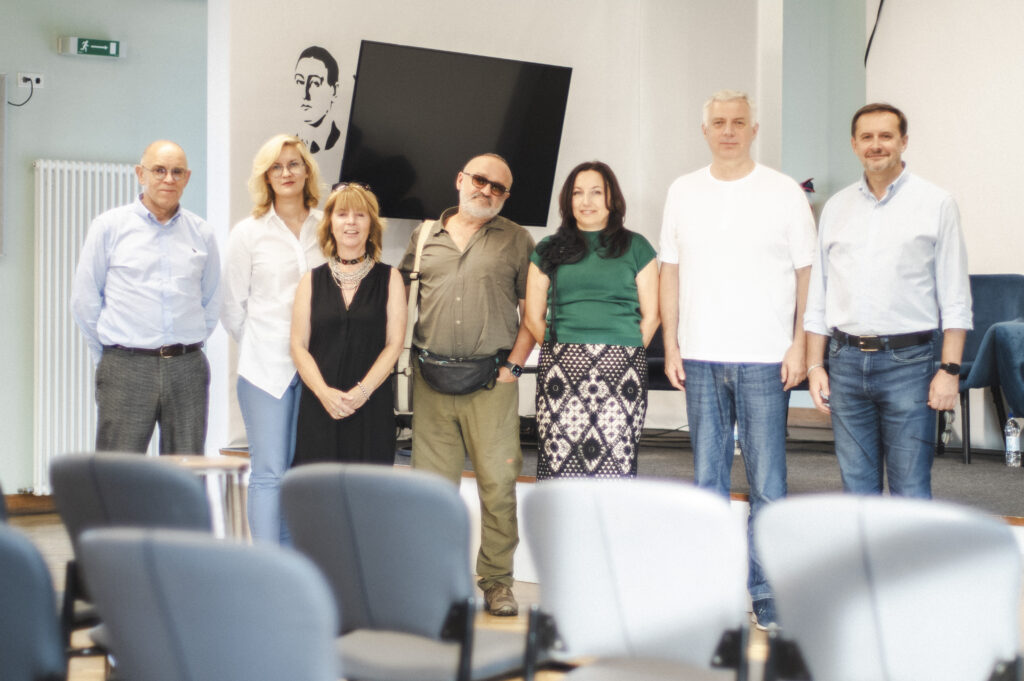
You can watch the recording of the discussion on our YouTube channel.
The Ukrainian Media and Communication Institute is an Influential Educational Center
The Ukrainian Media and Communications Institute (UMCI) continues to be a leading educational center, attracting highly qualified trainers. The institute emphasizes modern teaching methodologies and strives to create a safe learning environment for all participants.
5th Year of Training and Inspiration in the Journalism Teachers’ Academy (JTA)
In 2024, UMCI continued the Journalism Teachers’ Academy (JTA) project in collaboration with DW Akademie. This long-running training program aims to improve teaching methods for journalism instructors. In 2024, training sessions were held for the Journalism and Philology Department of Sumy State University (Spring) and the Educational and Scientific Institute of Journalism (Fall).
It is worth noting that this is not just a short training session. This is a training program aimed at strengthening the skills of journalism teachers, which lasts a whole semester and includes classes on modern approaches to planning courses, assessing student knowledge, group dynamics, online tools for working with the audience, etc. You can read more about JTA and the coaching staff here. A total of 27 teachers received certificates of completion of the training in the course of the year. In total, during the existence of the program, we have collaborated with ten Ukrainian universities. Almost all of them are in our database of departments and faculties of journalism (you can recognize them by the JTA mark).
It is valuable for us that JTA participants often apply the methods they learn in their work immediately after the completion of the program. For example, Alyona Romaniuk, the chief editor of the fact-checking project “NotaEnota,” noted that the JTA program encouraged her to create several tutorials for her students, something she hadn’t done before.
An important outcome of the program is that some former “students” of JTA became trainers themselves in 2024, such as Iryna Kopystynska (Vasyl Stefanyk Precarpathian National University), Paraskovia Dvoryanyn (Lviv National University), Yulia Lyubchenko (Zaporizhzhia National University), and Natalia Ostrovska (Zaporizhzhia Polytechnic National University). You can read more about them here. In addition, as part of the project, we continued a series of webinars where media professionals shared their professional experiences with teachers (and sometimes with students). In 2024, we covered various areas in the context of war: ethical coverage of the topic of mental health, the history of Ukrainian radio and the creation of a radio film, work on the media brand in difficult times, and interaction between journalists and press officers. We are glad that our webinars inspired teachers to organize meetings with speakers for their students. In total, 164 teachers from different universities attended our webinars.
JTA website: expanding the boundaries
In 2024, while working on the JTA website, we paid special attention to international experience in the media industry, journalism education, and science, including:
- published columns by Ukrainian journalism teachers and media researchers who were forced to move to safer countries due to Russia’s full-scale invasion of Ukraine. In their materials, the authors talked about how the education system in the USA, Canada, and Germany works, shared their impressions and experiences;
- interviewed journalism teachers from Western universities to find out how journalists are trained abroad, what challenges media markets in their countries face, and how this affects journalism education. Now our readers know more about the work of their colleagues from Poland, the USA, Great Britain, Spain, the Czech Republic, and Canada. Our products aimed at educating and training various audiences, which we place on our E-learning platform, deserve special attention.
In particular, in September, we prepared and presented the guide “What you should know about the world’s largest media.” It includes reviews of the media markets of the UK, France, the USA, Germany, and the Arab region, as well as pieces of analysis of 18 global media outlets covering the war in Ukraine. Google Analytics shows us that the most read texts are about the British The Times and the Qatari Al Jazeera. In the latter case, we understand that the audience now needs to understand what is happening in the Middle East and how much it may affect Ukraine.
Some teachers who participated in the presentation of this manual also expressed the wish to add information about other Arab media, as well as Chinese ones. We are happy to continue working on the project and are therefore seeking funding for this.
Throughout 2024, we closely monitored the trends in our education and academic fields. According to Google Analytics, our audience shared this interest. Among the top ten most-read articles were two texts by Otar Dovzhenko, editor and creative director of Lviv Media Forum. One covered issues of media plagiarism that Ukrainian outlets should avoid, and the second discussed the core values journalism faculties should instill in their students. Besides this, among the top articles was a column by Natalia Steblyna, professor at the Department of Journalism at Donetsk National University, addressing the challenges faced by Ukrainian academic conferences, and a collection of online tools for educators from JTA trainer Olena Churanova (although the article is nearly three years old).
Information Resilience Workshop
One of the areas we are consistently developing is media literacy for the older population (60+). In 2023, in partnership with DW Akademie, we launched the Information Resilience Workshop aimed at enhancing the media and digital literacy, as well as the psychological resilience of older individuals amid the information war. We also conducted an extensive study on the media needs and behaviors of older adults. In 2024, we made several significant strides toward achieving this goal.
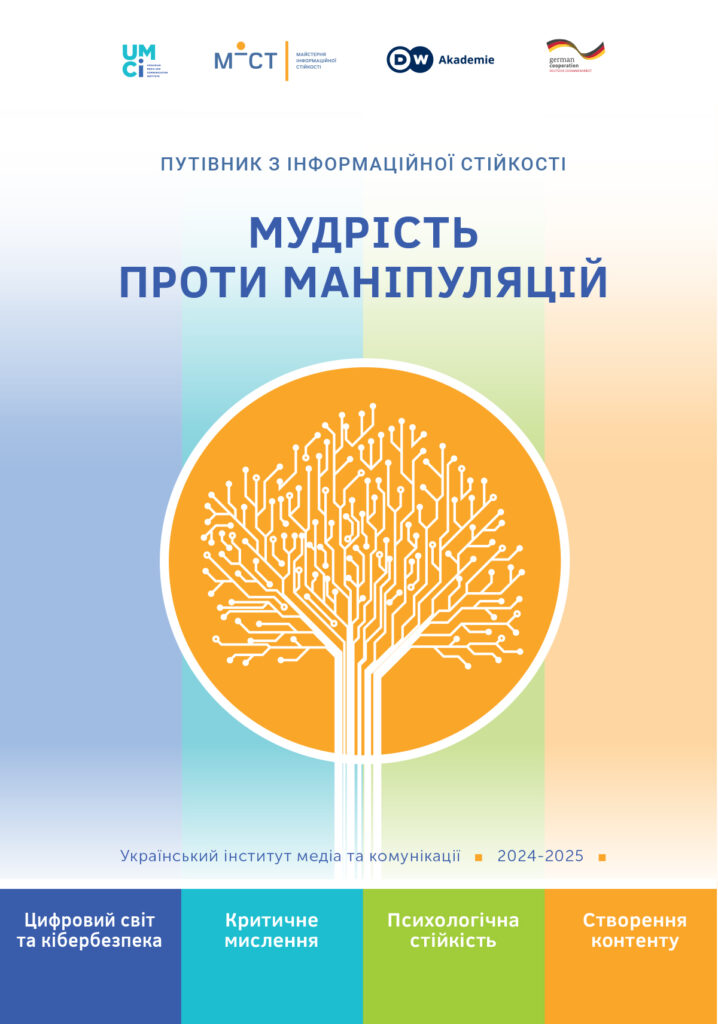
One of the key steps we took in 2024 was creating the handbook Wisdom Against Manipulation. It is designed to help older adults navigate the challenges they face on the internet, presenting information in a clear and accessible manner. Eleven experts contributed to its development. The handbook is divided into four sections and 16 topics, including:
- How the modern digital and media world impacts our lives
- How to use digital services
- Online security
- Basics of safe communication with relatives and acquaintances in occupied territories
- The media landscape in the modern world
- How to search for information
- What you need to know about sources of information
- What you need to know about fakes, misinformation, and other harmful content
- How Russian propaganda influences Ukrainian society through narratives
- How media and propaganda provoke our emotions
- How to protect your mental health from social media
- How to resist online pressure
- Mindful content creation
- How to create photos on your mobile phone
- How to create videos on your mobile phone
- How to write interesting posts for Facebook
The course is available in the “E-Learning” section of the JTA website.
Secondly, in the fall of 2024, we conducted training for trainers who will further help older people improve their level of media, information and digital literacy. The participants were 17 specialists from Ivano-Frankivsk, Ternopil, Lviv, Zaporizhia, Kyiv, and Khmelnytskyi regions, whom we selected from almost 70 applicants.
Their training consisted of four modules (based on the developed course):
- digital world and cybersecurity;
- critical thinking;
- psychological resilience;
- content creation.
The course was supplemented with two topics on the psychological features of efficient interaction with older people and adult education methods.
The final lesson for all participants was to conduct their training on the chosen topic.
In 2025, the UMCI will begin experimental training for older people (60+) in the regions (both onsite and online).
Integration of Media Literacy into Journalism Education Programs
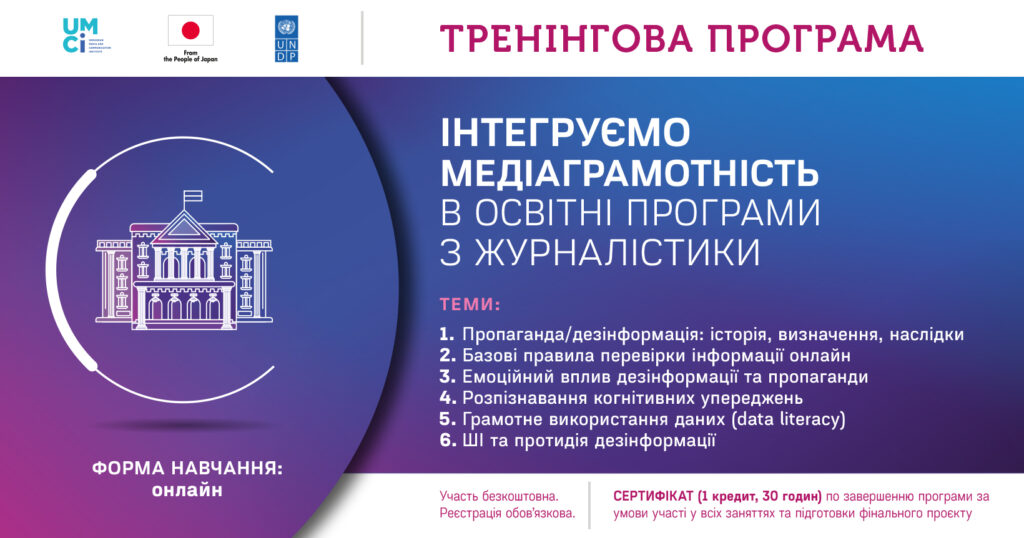
In the fall, the UMCI team, with the support of the United Nations Development Program and funded by the Government of Japan, launched a project aimed at promoting the integration of media literacy and countering disinformation components into journalism education programs at Ukrainian universities. In particular, the project includes a series of training (six sessions) for journalism teachers, as well as providing methodological recommendations on this topic. The program covers the topics of basic rules for verifying information using online tools, deconstructing conspiracy theories, recognizing cognitive biases, the capabilities of AI both for creating disinformation and for countering it and others.
After completing the training, the participants must develop lessons from their courses with integrated components of media literacy and countering disinformation. The best projects will be published on the JTA website later.
In December 2024, we completed the first stream of the training program. As a result, 18 teachers were trained.
Plans for 2025
Despite uncertainties arising from global events, particularly in the United States, which have a significant impact on the situation in Ukraine, the Ukrainian Media and Communication Institute (UMCI) is committed to continuing the work started in 2024.
Founder and Executive Director of UMCI, Diana Dutsyk, states:
“First and foremost, we will focus on further developing the Information Resilience Workshop, which was created to support older adults. We will also continue the work of the Journalism Teachers’ Academy (JTA). However, 2025 will present challenges for the Academy, as DW Akademie is concluding its collaboration with us on this project. We are open to proposals from other partners, as we would not want this highly successful project to end. Regarding our research efforts, in 2024 we began work on a study entitled ‘Integration of Media Literacy and Counteracting Disinformation Topics into Journalism Education Programs,’ which we plan to present in 2025. Additionally, we will release an analytical report on the outcomes of the Journalism Teachers’ Academy, as we have accumulated valuable insights over the six years of the program that we are eager to share.”