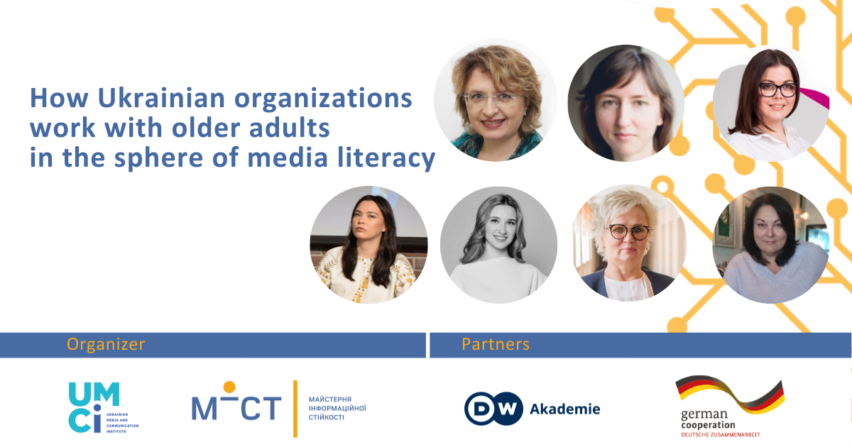
How Ukrainian national and local initiatives work with older adults in the context of media literacy, why this age group is more emotionally stable than it seems at first glance, and how to build trusting relationships with it — these issues were discussed at the international online conference “Media literacy for elderly people” held on 8 November by the Ukrainian Media and Communication Institute.
This conference was organized in partnership with DW Akademie with the financial support of the German Federal Ministry for Economic Cooperation and Development (BMZ).
At this event, the UMCI presented the findings of the study of media literacy competencies in older adult Ukrainians (60+) and their needs in media literacy education (for the full report, please follow the link). The study includes the results of the survey, focus group discussions, and interviews with key stakeholders. Some interviewed stakeholders joined the second session of the conference to talk about their experience of working with older adults in the context of media literacy.
We would like to share some notes of this discussion.
Is there enough attention to older adults in the sphere of media literacy in Ukraine?
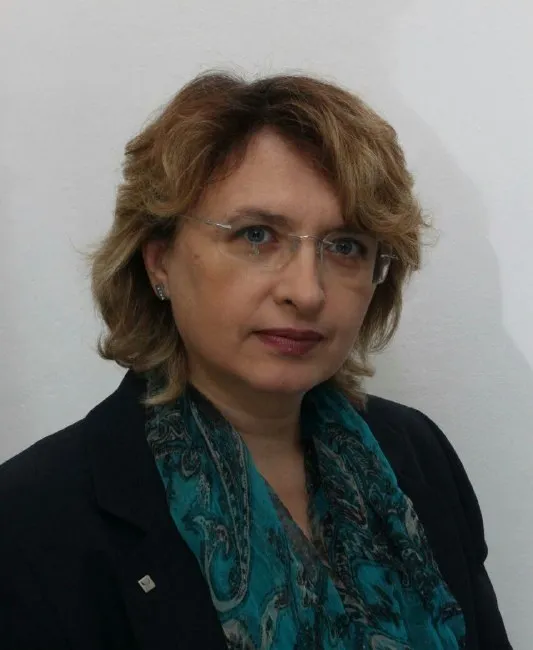
According to Lyubov Naydonova, Deputy Director of the Institute of Social and Political Psychology of the National Academy of Pedagogical Sciences of Ukraine, the experience of older adults can contribute to the development of media culture and culture in general in Ukraine, but the society underestimates this potential. “After a long-lasting information blockade of historical tragedies like the Holodomor, grandparents’ stories have become a source of reliable information. Their experience of living through the great injustices caused by the totalitarian state can become a basis to build our endurance on,” Lyubov says.
Therefore, according to her, the development of media literacy should be based on a socio-psychological model, the exchange of resources and knowledge: “Actually, this is the model that our national media education has been laying down since the very beginning. It will meet the needs of older adults best, as it is important for them to be recognized, respected, and treated as those who can contribute something of their own. In addition, this will help retired people counteract the social isolation.”
The national edutainment platform Diia. Osvita has been working in Ukraine since 2019. It helps people master up-to-date knowledge and skills, including digital competencies, in entertainment formats: guides, tests, webinars, educational series, and simulators. For older adults, Diia.Osvita offers the educational series Basic Digital Skills for People of Elegant Age, telling how to use a smartphone, how to secure the privacy of one’s device, how to use passwords correctly, etc.
“We understand that this age group can be vulnerable in media space. Giving them basic knowledge is our duty so that they would feel safer, understand what issues may arise and how to handle them, and, if necessary, find support and assistance,” says Yaroslava Dyo, project manager and leading specialist of Digital Skills Development and Digital Education Department at Diia.Osvita.
Efforts for older adults
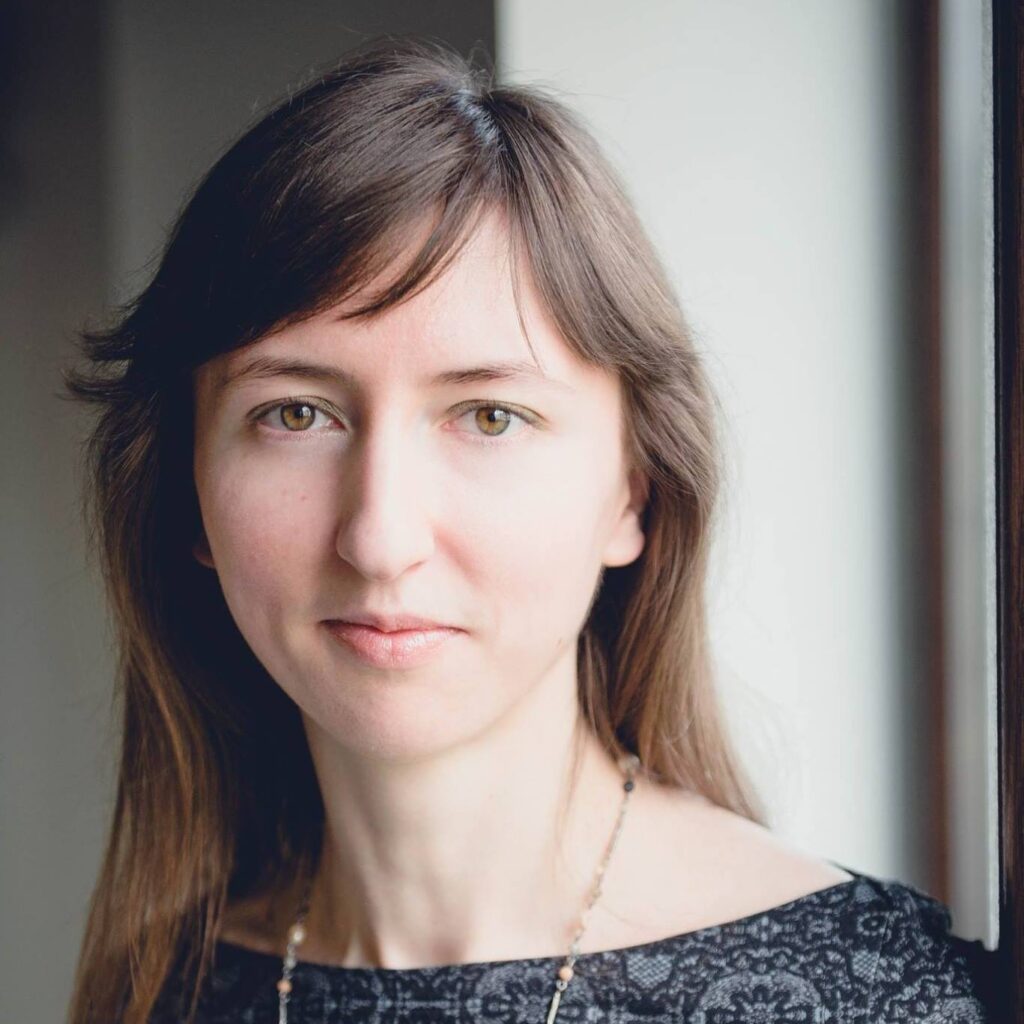
What the best way is to deliver media literacy training for older adults — separately or together with other age groups — opinions differ. “On the one hand, older adults need more time to digest and discuss information than young adults. On the other hand, when different ages interact in a group, it helps to destroy certain stereotypes and promotes greater openness between generations,” says Maryna Dorosh, a representative of the IREX project “Learn to Discern: Infomedia Literacy.”
According to the survey, Ukrainians mainly trust the news they receive from their family and friends. And for many older adults with low digital skills, their close ones are almost the only source of information, Maryna Dorosh adds. Therefore, it is essential to teach this age group to be critical not only about information from media sources but also about any information surrounding them.
According to Maryna’s observations, older adults, unlike young ones, struggle more with recognizing their emotions. They are less prone to self-reflection and caring about themselves: their personality was formed in the Soviet Union time, and they were not used to thinking about their feelings back then. So now, in the full-scale war, special attention should be paid to the mental health of this age group, i.e., to do your best to build an atmosphere of comfort and trust during training, Maryna Dorosh believes.
Lyubov Naydonova is more optimistic about the emotional stability of older adults. “In our recent study of stressful conditions in society, we used the media trauma index (media trauma is a kind of secondary trauma that results when an individual sees the trauma experiences not firsthand but on television or online — ed. note). It has been developed by our Laboratory for Psychology of Mass Communication and Media Education. We assumed that the media are more likely to traumatize seniors, but it turned out that the category of 18–29 y.o. is more susceptible to negative media influences. Therefore, we must give older adults an opportunity to tell how they cope with this,” says Lyubov Naydonova.
Maryna Dorosh says that the strongest motivation for older adults to come to training is to see others and discuss anything with them. If there is no willingness to attend group classes, then there is a problem in communication, Maryna says: “Communication should be built offline: letters and messages won’t do. Phone calls or live conversations are more efficient.”

Valeria Kovtun, founder and head of the National Media Literacy Project “Filter”, believes that trust is the basis for efficient learning: “We realized that it makes no sense to train Kyiv trainers and then send them to conduct training sessions in oblasts all over Ukraine: the locals will treat them as “outsiders.” Instead, it is better to teach local opinion leaders. If they have opportunities and tools to promote media literacy among older adults, they will do this as they see fit, addressing the context, the needs of their audience that already trusts them.”
What is in the way of teaching media literacy to older adults
According to Maryna Dorosh, media literacy initiatives lack consistency, whereas having training that is not episodic matters to older adults. Otherwise, building a trusting relationship with them is unlikely. “Changing certain attitudes and behaviors in this group can be harder than younger people,” Maryna says.

According to Anna Morhun, Ukraine lacks programs that would develop non-formal education for older adults at the local level. One of the existing programs — the Adult Education Center of Vinnytsia Community — is a separate activity of Vinnytsia NGO “Center Podillya Sotsium” under Anna’s leadership. “We also know that there are similar non-formal education programs at local levels in Sumy and Poltava,” she adds.
Some older adults cannot learn about media literacy online products because they do not have grandchildren or children who could help them figure this out, says Yaroslava Dyo. Therefore, within the framework of the Diia.Osvita project, the network of more than 6000 offline hubs was established, so anyone can come there to master digital literacy skills and access the Diia.Osvita website. “Usually, when a user contacts us, we try to find the closest hub to them. We are constantly expanding the network of our digital hubs. Of course, libraries, schools, and universities are our biggest friends,” Yaroslava says.
Working with older adults
“In the wartimes, a request to invest in media education may seem irrational because most of the resources are dedicated to the pressing needs of the army. However, non-governmental organizations are developing all over Ukraine, and they understand their audiences and do their best to earn the trust of older adults. Thus, an important task for organizations as government representatives is to build the most transparent and regular communication with older adults and other organizations,” Valeria Kovtun underlines.
“Older adults understand that they need to invest more time and effort in learning than young people, and they forget something. It makes them feel helpless, be afraid to press a button,” Lyubov Naydonova says. So, she recommends to use two techniques when working with this group:
- The first one is to allow them to put things in their own words. “You should ask them what they see: an arrow, an airplane, lightning, etc. It will help them not feel disappointed in themselves,” Lyubov says.
- The second one is to look for something they already feel confident about in their experience and to appeal to it. For example: “You have read tons of books, can’t you read this manual?”, “You were driving the harvesters, can’t you operate this little technical thingy?”.
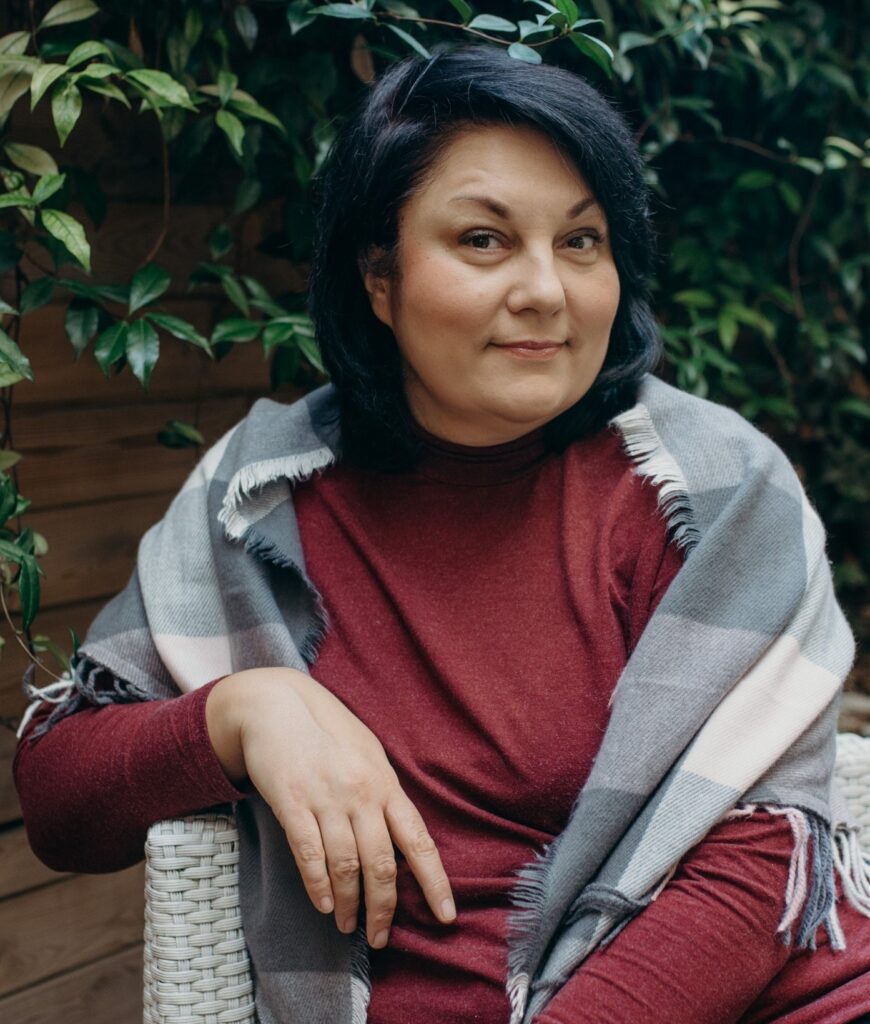
Media trainer Natalia Fenko, who represents NGO “Foundation Supporting Older People “Vik Shchastia”, agrees that one needs to work with the background of this age group: “Not to cross out everything they have learned before, and say ‘now I’m going to teach you something completely new.’ On the contrary, to open their whole life experience up, to find the best they have got and that they would like to share.”
Actually, it’s not always easy to do so. “Unfortunately, our seniors we work with are afraid to say even the word “I.” They are hiding behind “we.” In order to get them out of their shell and to open their own self that they could, for example, broadcast online, I decided to apply to them the project thinking and forming of media format that I practice with my students (Natalia is a professor at the Volodymyr Vynnychenko Central Ukrainian State University– ed. note). I used to think that media education was just knowledge from certain media spheres, that is, the ability to deal with fakes and check facts to be safe with information. Now, I realize that media education is a broader concept. It is the capability to broadcast your “I”, to defend it, and to show oneself,” Natalia Fenko says.
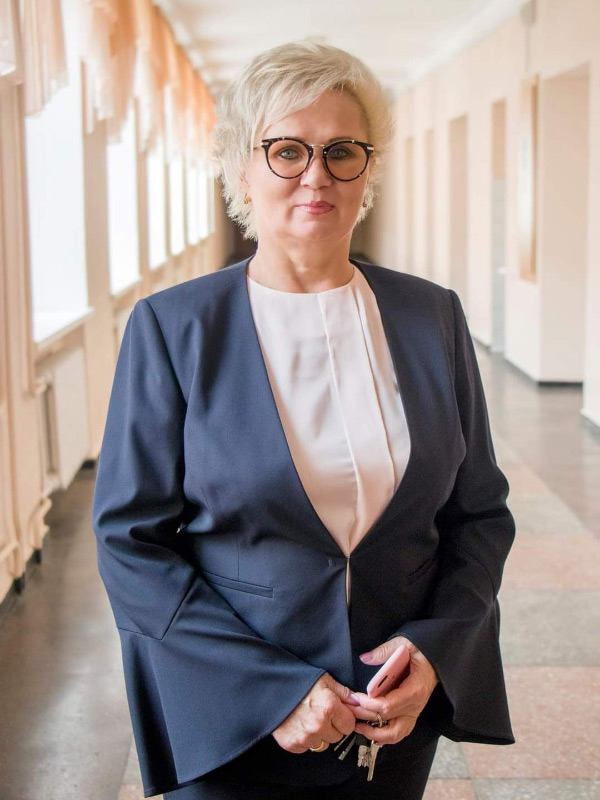
Svitlana Nestulya, a leader of the project University of the Third Age at the Poltava University of Economics and Trade, believes it is worth building cooperation between older adults and university students. “Before launching the project, we surveyed seniors to identify their educational needs: who, for example, has a computer and how they use it. It turned out that older adults are willing to learn digital skills, but their children or grandchildren do not have time to help them with this. Our students volunteered to introduce digital competencies to them. This collaboration inspires young people. And for us, it is important to maintain the connection between generations when the elders share wisdom and the young teach the elders the skills they have got,” Svitlana Nestulya says.
According to Anna Morhun, this audience should be involved in developing media literacy policies and programs for older adults. Especially as they show their willingness, Anna says. “The communities could have a kind of senior people boards, like advisory bodies at the mayor’s office. But nothing for seniors without seniors,” she adds.
Topics to learn with older adults
Maryna Dorosh believes that it is definitely necessary to discuss the concept of the information bubble with older adults: it should be clear to them how limited the range of sources where they get information can be. She thinks that training should include checking information, emotions, propaganda in various formats, and propaganda narratives.
As an example of a project that may be of interest to this kind of audience, Maryna mentions the podcast Cupboard Living (Zhyttia v Servanti; «Життя в Серванті» in Ukrainian), that IREX created together with The Ukrainians. This project tells how the Soviet government disseminated its propaganda through holidays and related traditions, and they are still partially here. “It would be a good thing if people did not only listen to the podcast but also discussed what they heard and reflected on it with others. It is the way to change their attitude and behavior. Maybe later we will organize this discussion,” Maryna Dorosh says.
Anna Morhun believes that it is necessary to explore the topic of the possible addiction of older adults to social media and online news: “Our team cares that the older generation’s willingness and engagement in the use of modern information technologies would not do any harm, especially to their psychological health. It is a big challenge for us.”
According to Diana Dutsyk, the Executive Director of the Ukrainian Media and Communication Institute, it is better to start learning basic skills and then work with critical thinking, information perceiving, and content-creating. “What is more, emotional and psychological stability is significant today because the world now is turbulent. And then it is fast-moving, and one should constantly adapt to these new conditions. So, in my opinion, these training programs should combine many components,” Diana Dutsyk says.
For the summary of the conference’s first session, where we discussed the efforts of European countries in the context of media literacy, please follow the link.
Translation by: Vira Sida
Українською читати тут.