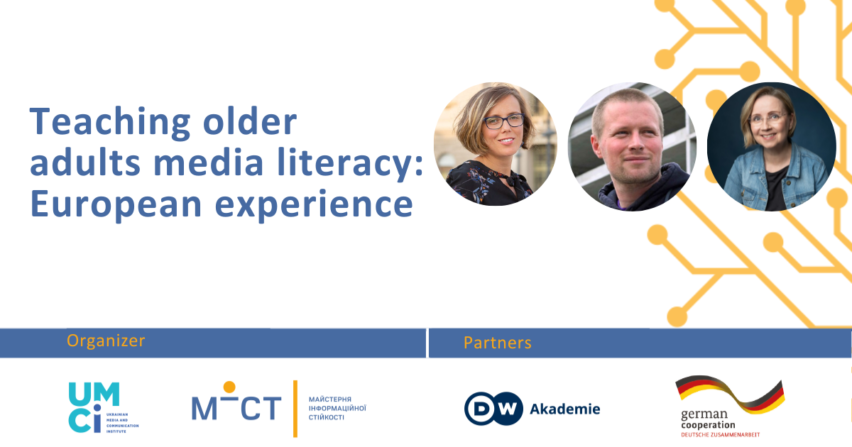
How European countries improve media literacy in older adults, what is the government’s role in this, and why just training sessions are not enough – this was discussed at the international online conference “Media literacy for elderly people” held on 8 November by the Ukrainian Media and Communication Institute.
This conference was organized in partnership with DW Akademie with the financial support of the German Federal Ministry for Economic Cooperation and Development (BMZ).
The first session of the event was about the European experience. The researchers who have been working on the topic of media literacy for years joined this session. To name a few:
- Päivi Rasi-Heikkinen, Professor of Education at the Faculty of Education, Media Education Hub, the University of Lapland, Finland. She has a PhD in Education and SScD in Social Psychology. She has been working on and managing research and development projects in media education for more than 20 years. Last year, she published the book “Older People in a Digitalized Society: From Marginality to Agency).
- Jaroslav Valůch, trainer and consultant at the non-profit organization Transitions (TOL), that works to strengthen the professionalism, independence, and influence of mass media in the post-communist countries of Europe and the former Soviet Union. Since 2016, Jaroslav, in the same organization, has been managing news literacy programs and fact-checking programs aimed at, among other things, older adults in the Czech Republic.
- Annamária Neag, Associate Professor at the University of Groningen (Netherlands) and senior research fellow at the Charles University in Prague (Czech Republic). Her field of expertise lies at the crossroads of media literacy, migration, and digital activism. She is also on the editorial board of the Journal of Media Literacy Education.
Why being online is not enough to work with older adults: experience of Finland
Finland ranks second best in e-government development among 193 countries of the world. It is also one of Europe’s leaders in Internet penetration and 11th best in the World Digital Competitiveness Ranking. However, Finland still has audiences not covered by digitalization: according to Statista’s 2022 data, 52% of the age group 65–74 used the Internet daily, and only 20% of the group 75-89 did it. Therefore, for older adults, who do not use or do not have access to the Internet, digitalization of governmental services does not automatically mean accessibility.
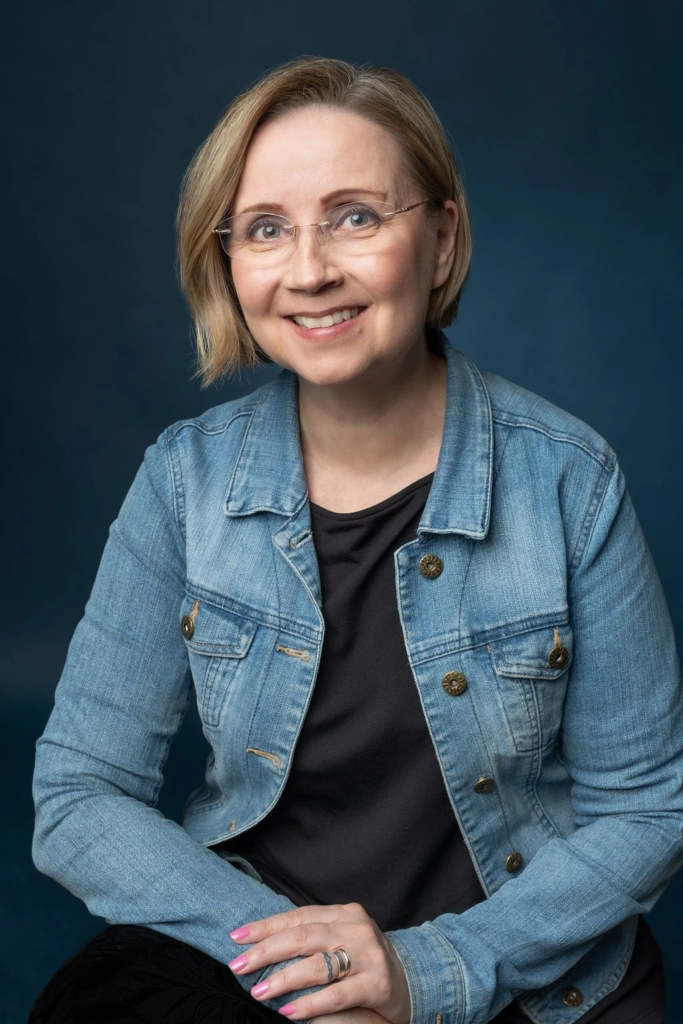
Päivi Rasi-Heikkinen says that Finland does not have enough national, systematic research on media literacy levels in older adults and spheres where they apply it. In addition, some of them are difficult to reach because they live in remote locations, leave home rarely because of health issues, and do not use social media. And for the government, though it is dealing with media literacy issues and declares the digital inclusion of older adults a priority, it is not all perfect in practice, according to Päivi. “The government invests more in media literacy programs for children and youth than in projects for older adults. It shows a certain inequality. Organizations working with seniors have concerns that funding will be decreasing,” Päivi says.
She observes that many media literacy trainings in Finland are aimed at improving the technical skills of older adults (it is about using different devices and applications). However, in her opinion, when working with older adults, one should pay more attention to a critical understanding of information online, information hygiene, using the news, data privacy, using the Internet safely, digital interactions, and creating content. “A program should address the daily needs of this age group,” the researcher believes.
Over the past five years, Päivi, as a representative of the University of Lapland, has worked on several large-scale research projects devoted to the media literacy of older adults. In particular, the projects of IkäihMe (in cooperation with the University of Helsinki and other stakeholders) and OdigO (with the support of the Lapland University of Applied Sciences).
Based on these studies, Päivi Rasi-Heikkinen believes that it is important not only to develop a media literacy course for older adults but also to teach the trainers how to work with them correctly. “We have found out that peer-to-peer learning is useful for this age group,” she says.
It is essential to hold offline events. “One of the reasons why older adults sign up for courses is striving for socialization. They can discuss learning and other matters with each other,” Päivi adds.
According to her, other interested establishments, like public libraries, non-governmental organizations for pensioners, adult education organizations, social support centers, and medical institutions, can be involved in supporting and training older adults. There should also be cooperation with businesses: media companies, banks, telecommunication service providers.
A few recommendations from Päivi Rasi-Heikkinen to Ukrainian colleagues:
- it is necessary to develop national media literacy policies that would reach adults who do not use the Internet (there will be some anyway). Thus, the services should be provided to them differently: by phone and/or in person;
- to develop accessible services built around the needs of users. Older adults should be involved in the development of such services;
- to present information through the media so that it is acceptable for older adults with different levels of digital competencies.
Trust first: how non-profit organizations in the Czech Republic work with older adults
Founded in the Czech Republic in 1999, the organization Transitions (TOL) publishes the Transitions Online magazine and conducts training sessions for journalists, the current and future ones, and since 2016 it has been implementing media literacy initiatives for older adults.
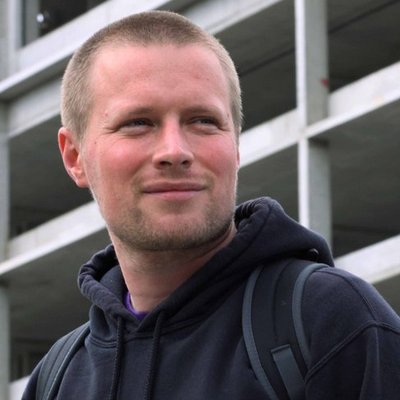
“Then, seven years ago, we conducted a training for a group of journalism students about using open sources in investigations. After the event, several participants said they would like to share their new skills with some groups that do not receive enough attention in the media space. They meant older people, specifically,” Jaroslav Valůch recalls.
He says that at the beginning of the training, the audience of 60+ was treated as a potential spreader of fakes and a potential victim of online threats. But over time, the attitude has changed. “People of older age – of any age, basically – don’t like being reprimanded for misbehavior online. So, now we present fakes or disinformation as an interesting subject that our participants – a sort of Sherlock Holmes – have to investigate. For example, they have received an email with a suspicious attachment, and they should find out how scammers want to manipulate them. Instead of intimidating, we give our participants an opportunity to train their cognitive skills,” Jaroslav says.
In 2018, Transitions (TOL) joined forces with the Elpida organization that implements educational initiatives for older adults. Since then, the organizations have held a few meetings for seniors all over the Czech Republic, cooperating with local partners: libraries, clubs, and media outlets. There were several factors contributing to the project implementation: a vast network of public libraries, a developed railway network, and the small size of the Czech Republic itself (the total area of the country is almost the area of the Kyiv, the Cherkasy, and the Zhytomyr regions together — ed. note).
Jaroslav Valůch is convinced that offline activities in small learner groups are the most successful format for older adults’ training. However, he believes that a one-time visit of an expert from the capital city, who will talk about fake news, is not enough: “You need to come several times to get people involved in our initiative. There is a reason why we do not call it a “media literacy improvement project” but rather “a trust-building project” that allows uniting people who are interested in different aspects of media literacy.”
Jaroslav says that meetings with psychologists are very popular among older adults as they explain how to develop a healthy media consumption diet. The participants also like two-day sessions with young journalists from the Czech radio who have their own fact-checking project. “Older people, together with journalists, checked the facts and worked with ambiguous information. The results of their cooperation were posted on the radio’s website. It also mentioned that our people contributed to creating this content,” Jaroslav says. — It is significant to understand that one of the reasons why seniors do not trust the media is that the latter do not communicate in the language and formats that are right for it. That is, the media people have no understanding of the needs of this age category. We are trying to change that. Besides Prague, we plan to hold such events involving local radio waves and companies in other cities. We build people’s trust in quality journalistic work and their ability to deal with this information chaos.”
After older people have participated in several events, they are offered additional online tools to go deeper into the selected topics. For example, Transitions (TOL) and Elpida recently launched an online course Fakt jo? that trains seniors to navigate through media messages. For more details, please follow the link: www.faktjokurz.cz/en
Mistrust can also be helpful
Between 2017 and 2019, Annamária Neag and her colleagues worked on the project Media Literacy for Unaccompanied Refugee Youth for people (mainly from the Middle East) who were massively seeking refuge in Europe at that period, particularly in the Netherlands, Sweden, and Italy. The researchers studied how refugees used media and, based on the results, developed training tools that would allow them to improve their media literacy skills. Even though young people were the target audience of this project, some of its findings can be used for working with older adults.
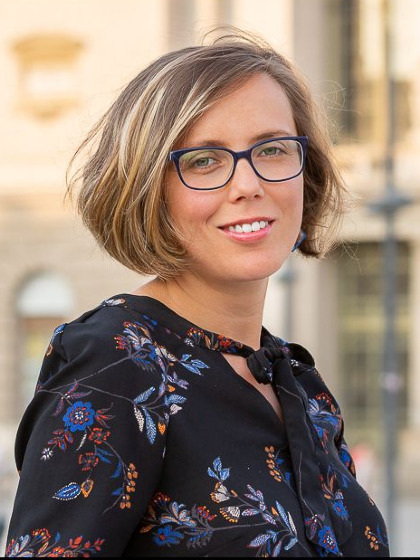
“We found out that smartphones were important tools for refugees. They needed them both when traveling from home to asylum and to maintain contact with their loved ones who stayed in their home countries. Meanwhile, the residents of host countries were surprised that the refugees could use smartphones. Technologies hardly fit an image of a disenfranchised person,” Annamária says. She adds that refugees also need smartphones to learn and master the language.
According to the researcher, the refugees had different levels of technical skills and training in terms of media literacy. So, in her opinion, one cannot start a media literacy project hoping that it will address all refugees, no matter what European country they arrived in. “It is important to understand that European countries have different policies and funding for media literacy projects. In Sweden, for example, they gave iPads or computers to refugees in schools, but in Italy, this was not the case,” Annamária says.
As refugees are going through the hard times, it is usually difficult for them to trust someone. Children can benefit from media literacy from their mentors and guardians, who became their second family in Europe. What about older refugees? Their mistrust can be used in the context of learning. “You can explain to them: doubting is ok when you encounter something unknown,” Annamária says.
Elderly people can have difficulty using some platforms, for example, because of a small font, an unusual touch screen, or a superficial knowledge of technology (for example, they have skills in social media communication and not in something more difficult). Older adults may also need more time to master new skills. All these issues should be considered when developing media literacy programs, Annamária says.
The researcher also recommends checking the course MediaWise for Seniors, training older adults to distinguish between the truth and the lies on the Internet, and the report Overcoming Digital Divides based on a six-part workshop series that explored solutions to close Canada’s digital divides. “Use the research from other countries in a new context to avoid starting your own one from scratch,” Annamária Neag says.
The Ukrainian Media and Communication Institute in partnership with DW Akademie with the financial support of the German Federal Ministry for Economic Cooperation and Development (BMZ) has conducted the study of the needs of older adults (60+) in the field of media literacy in Ukraine. You can download the report in English here:
Translation by: Vira Sida
Українською читайте тут.