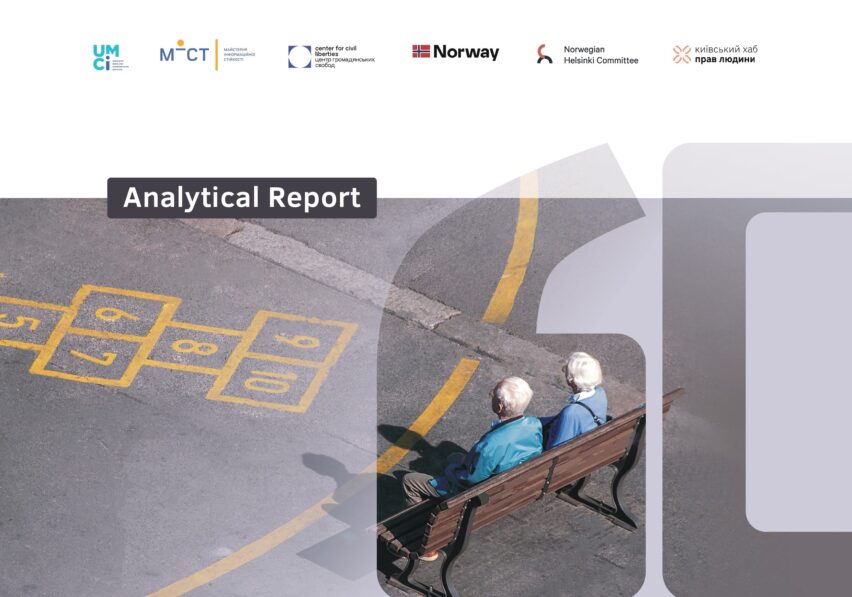
The Ukrainian Media and Communication Institute conducted a study titled “Age Discrimination and the Media: Representations and Experiences of Older Adults (60+)” to, among other things, analyze the Ukrainian media for ageist practices.
The study consisted of several components:
- Four online focus group discussions with 22 older adults. One group consisted exclusively of older journalists (60+).
- A two-month media monitoring effort conducted using the Semantrum AI analytics platform.
Additionally, based on a review of the scientific literature and preliminary monitoring of the information landscape, UIMC experts identified a list of potential frames regarding older adults in the media. During the media monitoring, the presence of each frame was either confirmed or refuted.
Participants in the focus group discussions do not perceive the Ukrainian media as overtly ageist, but they emphasize the insufficient visibility and agency of older adults in the public sphere.
The results of the media monitoring show that overt ageism is rare in the Ukrainian media, but coverage of issues affecting older adults is generally highly stereotypical. In particular, the Ukrainian media portray people aged 60 and older either as needing care and assistance or in the context of pension and social security issues and the demographic crisis.
Overall, the media landscape is dominated by frames with negative connotations, specifically (1) those emphasizing the biological fragility and vulnerability of older adults; (2) those suggesting that they are a burden on their families or on the country. One of the most common examples of hidden ageism is the frame of familial objectification (references exclusively to the roles of “grandmother/grandfather,” an emphasis on baking, handicrafts, raising grandchildren, or spending time at the dacha; the absence of sexuality, personal interests, or a professional past outside the family). Incidentally, the focus group participants themselves often reacted negatively to terms such as “auntie” and “grandma”/“grandpa.” At the same time, they viewed positively expressions that emphasize experience and dignity, such as “people of a respectable age,” “people of the golden age,” or “elegant age.”
The study also revealed that journalists, unlike other focus group participants, experience age discrimination more acutely in their profession (in newsrooms or when looking for work).
More findings can be found in the UMCI analytical report prepared based on the study’s results. You can download it here:
This Analytical Report, based on the findings of the research, has been prepared by experts of the Ukrainian Media and Communication Institute NGO within the framework of the Small Grants Competition “Ability to Impact” implemented by the Kyiv Human Rights Hub in cooperation with the Center for Civil Liberties and the Norwegian Helsinki Committee with the support of the Government of Norway. The content of this Analytical Report presents the opinions of the Ukrainian Media and Communication Institute NGO and does not necessarily reflect the views of the Kyiv Human Rights Hub, the Center for Civil Liberties, the Norwegian Helsinki Committee and the Government of Norway.